
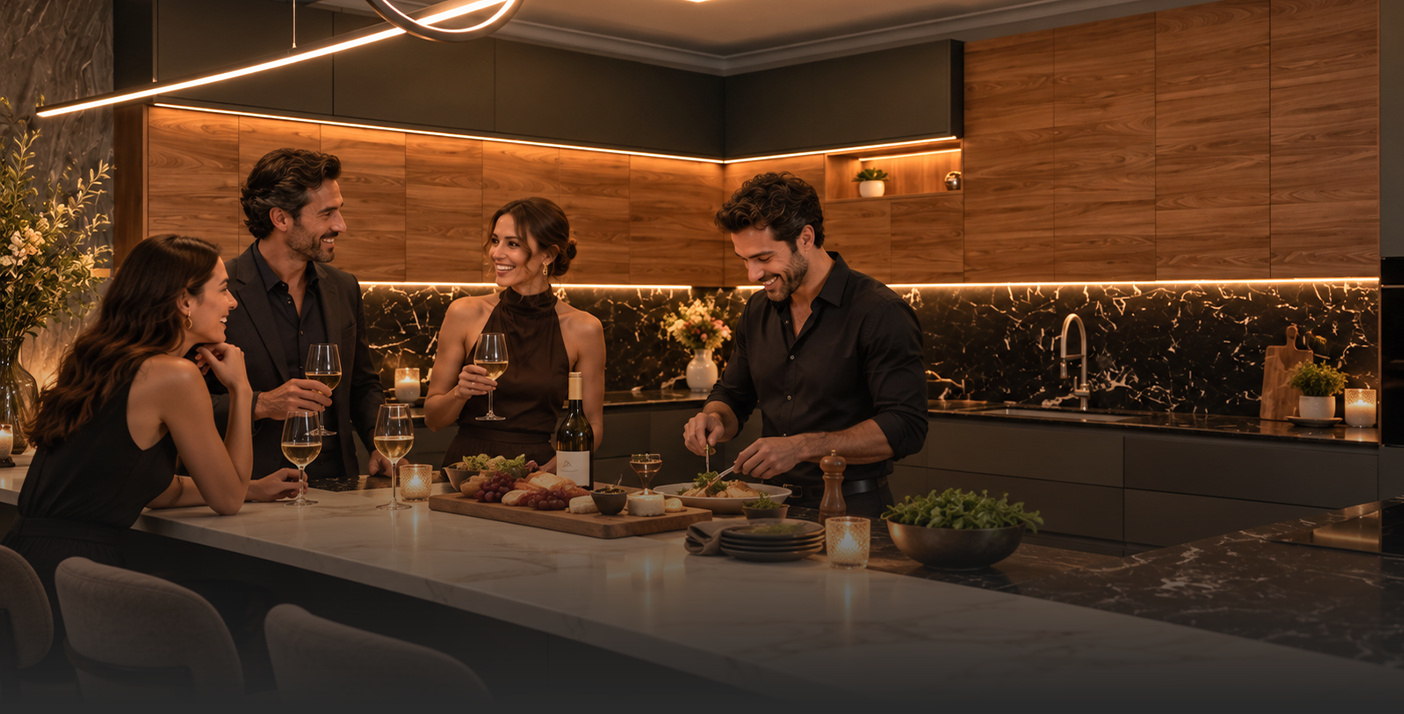
The modern kitchen is no longer simply where meals are prepared.
It is where guests gather before dinner, conversations continue after the plates have been cleared, and everyday family life naturally unfolds.
For homeowners who enjoy hosting, kitchen design for entertaining requires more than an impressive island and beautiful finishes.
The layout must allow people to gather without interfering with cooking. Storage should support serving and entertaining. Lighting needs to move from practical to atmospheric. Sculleries, bars and other supporting spaces should work with the main kitchen rather than independently.
At Robod, bespoke kitchen design starts with understanding how the homeowner lives. For people who love entertaining, that means creating a kitchen that supports connection without sacrificing performance.
Why the Kitchen Has Become a Social Space
Open-plan architecture has transformed the role of the kitchen.
In many luxury homes, the kitchen connects directly to dining rooms, lounges, patios and entertainment areas.
As a result, it is almost always visible.
The kitchen therefore needs to perform as both a working space and part of the interior design.
A successful social kitchen should allow someone to prepare dinner while remaining part of the conversation. Guests should have natural places to gather without blocking important work zones.
That balance begins with layout.
Design the Layout Around People
A kitchen designed for entertaining should consider two types of movement:
Working movement and social movement.
Working movement happens between refrigeration, preparation, cooking, washing and storage.
Social movement includes guests arriving, collecting drinks, sitting at the island and moving towards dining or outdoor spaces.
Problems occur when these routes constantly cross.
Useful zones may include:
-
Preparation
-
Cooking
-
Cleaning
-
Pantry storage
-
Drinks
-
Serving
-
Guest seating
A guest getting another glass of wine should ideally not need to walk through the main cooking area.
Good layout creates separation without making the host feel isolated.
Make the Island Work Harder
In many luxury entertaining kitchens, the island becomes the social anchor.
It may provide:
-
Preparation space
-
Informal dining
-
Drinks service
-
Storage
-
Serving space
-
Guest seating
-
A visual focal point
But bigger is not automatically better.
A poorly proportioned island can restrict movement and create awkward distances.
Kitchen island design should consider circulation around every side, seating comfort, appliance positions and the relationship with surrounding rooms.
Seating should also be positioned carefully.
Guests need to feel connected to the host without sitting directly inside the primary cooking or preparation zone.
Keep the Host Connected
One of the biggest advantages of an open-plan kitchen is the ability to cook without disappearing from the social experience.
The position of the sink, hob and preparation surfaces influences whether this actually happens.
Where appropriate, preparation zones can face the island or living space rather than a blank wall.
Serving areas can be positioned closer to dining spaces. Drinks can be separated from cooking. Storage can reduce unnecessary movement.
The goal is not simply openness.
It is connection.
A good social kitchen allows the host to remain involved while the practical work of preparing food continues.
Use a Scullery Behind the Scenes
For frequent entertainers, a bespoke kitchen scullery can be one of the most valuable additions.
The main kitchen remains the visual and social centre while the scullery handles some of the less glamorous work.
It can provide space for:
-
Dishwashing
-
Food preparation
-
Cleaning products
-
Small appliances
-
Additional refrigeration
-
Pantry items
-
Used serving dishes
During a gathering, plates and preparation mess can move out of sight rather than accumulating around the island.
The scullery should still be planned carefully.
It needs logical storage, sufficient work surfaces and easy movement between the main kitchen and supporting area.
Plan Storage Around Entertaining
Hosting requires different storage from ordinary weekday cooking.
Consider where you will keep:
-
Platters
-
Serving bowls
-
Glassware
-
Wine
-
Table linen
-
Bar accessories
-
Coffee equipment
-
Extra crockery
-
Large pots
-
Entertaining appliances
These items should be positioned according to where they are used.
Glassware belongs near the drinks area. Platters should be accessible close to serving surfaces. Coffee cups work best near the coffee machine.
This is where custom kitchen cabinetry becomes particularly valuable.
Instead of adapting your habits to standard cupboard dimensions, storage can be designed around your lifestyle.
Add Bars, Coffee Stations and Entertainment Features
A social kitchen does not need to stop at cooking.
A custom home bar can create a dedicated drinks zone, keeping guests away from busy food-preparation areas.
A coffee station can simplify both mornings and after-dinner service.
Display cabinetry can showcase glassware, art or curated objects.
Wine storage can become part of the interior rather than simply another appliance.
For homes where the kitchen connects to a lounge, entertainment room or patio, these features help create a broader lifestyle environment.
Robod's experience across kitchens, bars, TV units and bespoke cabinetry allows these elements to be considered together.
Choose Materials That Can Handle Entertaining
An entertaining kitchen needs to be beautiful without becoming precious.
Worktops will experience spills.
Cabinetry will be touched constantly.
The island may become a serving station, buffet, homework desk and drinks counter within the same week.
Material selection should therefore balance appearance with performance.
Consider:
-
Durability
-
Cleaning requirements
-
Resistance to moisture
-
Fingerprints
-
Texture
-
Long-term appearance
-
Compatibility with surrounding interiors
Warm timber tones can create an inviting atmosphere. Stone can add permanence and visual impact. Textured finishes introduce depth.
Luxury should feel comfortable enough to use.
Use Lighting to Change the Mood
Lighting allows a kitchen to change personality throughout the day.
During food preparation, good task lighting is essential.
During dinner or drinks, the same room may need softer, warmer illumination.
A layered plan can combine:
-
Task lighting
-
Ambient lighting
-
Pendant lighting
-
Integrated cabinet lighting
-
Display lighting
-
Accent lighting
Feature pendants can establish the island as a social focal point.
Integrated lighting can highlight shelves, bars or display cabinetry.
Most importantly, lighting should allow the kitchen to stop feeling like a workspace once the cooking is finished.
Connect the Kitchen to Outdoor Entertaining
For many South African homes, social living extends outside.
Patios, gardens, pools and braai areas often form part of the entertainment experience.
When planning the kitchen, consider the route between indoor preparation and outdoor hosting.
Serving areas, refrigeration and drinks storage can be positioned to support that connection.
Wide openings and uninterrupted sightlines may also help the host remain connected to guests outside.
A well-designed entertaining kitchen should respond to the whole social environment—not just the cabinetry within one room.
Why Bespoke Design Matters
No two households entertain in exactly the same way.
Some host large family gatherings.
Others prefer intimate dinners.
Some need a strong connection to a braai area. Others want a formal dining experience.
A standard kitchen cannot anticipate every lifestyle.
Bespoke design allows the layout, storage and cabinetry to respond to how the homeowner actually hosts.
That is the difference between a kitchen that merely looks ready for entertaining and one that genuinely works for it.
Frequently Asked Questions
What makes a kitchen good for entertaining?
A good entertaining kitchen combines logical working zones with comfortable social areas so guests can gather without interfering with preparation and cooking.
Is an island essential for a social kitchen?
No. Islands can be highly effective, but only when the room has sufficient space. Peninsulas, dining tables and dedicated bars can provide alternatives.
Why is a scullery useful when entertaining?
A scullery provides additional preparation, washing and storage space while helping the main kitchen remain uncluttered.
Where should guests sit in an entertaining kitchen?
Seating should allow conversation with the host without obstructing primary routes between preparation, cooking and washing zones.
Should a bar be separate from the kitchen?
It depends on the home. A dedicated bar can reduce traffic through the kitchen and create another social focal point.
What lighting works best for entertaining?
Layered lighting is ideal because it provides bright task illumination while cooking and softer ambient light later in the evening.
Can an existing kitchen be redesigned for entertaining?
Often, yes. A renovation can reconsider layout, storage, seating and supporting spaces to improve social flow.
Create a Kitchen Made for Gathering
A kitchen designed for entertaining should make hosting feel easier.
Guests should have somewhere natural to gather. The host should remain connected. Storage should support real entertaining needs, and lighting should transform the room when the practical work is finished.
Most importantly, the kitchen should reflect the way you live.
Robod combines bespoke design, precision manufacturing and craftsmanship to create kitchens and interior cabinetry tailored to the homeowner.
Visit the Robod Fourways showroom to experience materials, layouts and cabinetry possibilities in person.
Planning a kitchen built around hosting and social living?
Book a consultation with the Robod design team and start creating a space designed for cooking, gathering and entertaining.